Darknet Markets 2026:
The dark web is part of the deep web but is built on darknets: overlay networks that sit on the internet but which can't be accessed without special tools or software like Tor. Tor is an anonymizing software tool that stands for The Onion Router — you can use the Tor network via Tor Browser.
| Darknet Market | Established | Total Listings | Link |
|---|---|---|---|
| TorZon Market | 2022 | 140+ | Onion Link |
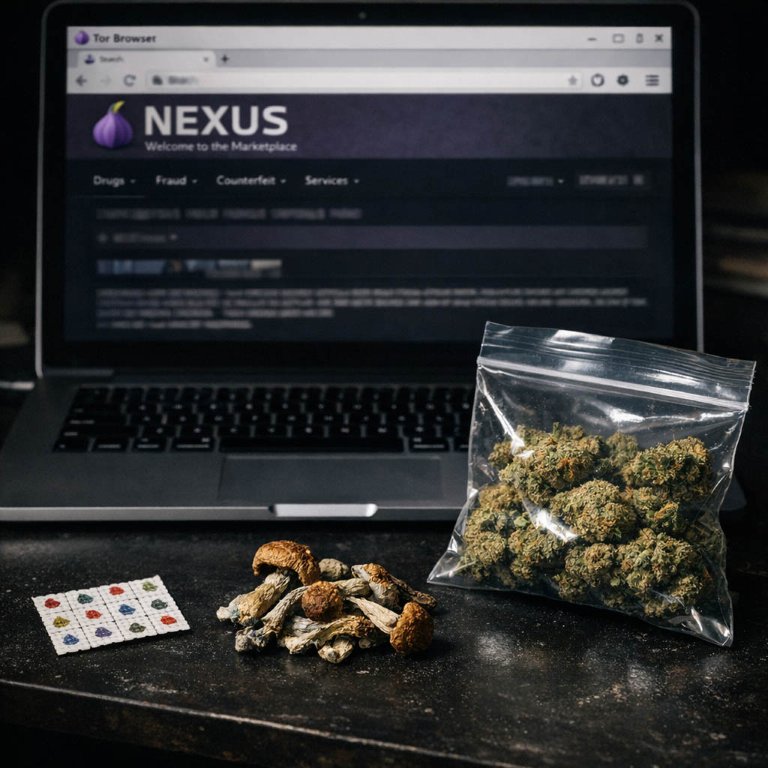
| Nexus Market | 2024 | 600+ | Onion Link |
| Abacus Market | 2022 | 100+ | Onion Link |
| Ares | 2026 | 100+ | Onion Link |
| Cocorico | 2023 | 110+ | Onion Link |
Updated 2026-07-28
How the Darknet Enables Safe and Private Drug Sales
Encrypted darknet marketplaces function as secure digital platforms for pharmaceutical commerce by leveraging foundational cryptographic technologies. Access requires specialized software like Tor (The Onion Router), which anonymizes user traffic by routing it through multiple encrypted layers. This architecture effectively separates a user's physical location and identity from their online activity, creating a private browsing environment. Marketplaces themselves are hosted as .onion services within this anonymized network, making them inaccessible to standard web browsers and resistant to casual surveillance or takedown.
The transaction process incorporates multiple security layers. User accounts and private messages are protected with end-to-end encryption, ensuring that only the intended recipient can decipher the content. Financial transactions are conducted exclusively via cryptocurrencies such as Bitcoin or Monero. These digital currencies operate on decentralized ledgers, providing a pseudonymous payment method that does not rely on traditional banking systems. The use of cryptocurrency wallets, controlled solely by the user, further enhances financial privacy by eliminating intermediaries.
Operational security is maintained through systematic practices. Buyers and vendors interact using encrypted messaging, often employing PGP (Pretty Good Privacy) keys for verified and secure communication. This allows for the safe exchange of sensitive information, like delivery addresses, without exposing it to the platform itself. The combination of network anonymity, encrypted communication, and cryptocurrency payments establishes a comprehensive framework for secure and private access to pharmaceuticals, addressing core concerns over privacy and discretion in a digital commercial space.
How Darknet Markets Keep Drug Shopping Private and Secure
Encrypted darknet marketplaces function as secure digital storefronts, providing a private channel for pharmaceutical acquisition. These platforms utilize end-to-end encryption for all communications, ensuring that messages between buyers and vendors remain confidential and inaccessible to third parties. Access is mediated through networks like Tor, which anonymizes user traffic by routing it through multiple encrypted layers, effectively masking the origin and destination of the connection.
The architecture of these markets is designed to protect user identity. Registration typically requires only a username and password, with no linkage to real-world identities. Transactions are conducted using pseudonymous wallet addresses, and marketplaces often employ tumbling services to further obscure the trail of cryptocurrency payments. This layered approach to privacy by design creates a secure environment where individuals can engage in commerce without exposing their personal data.
The operational security extends to the marketplace infrastructure itself. Many platforms are hosted on bulletproof servers in jurisdictions with favorable laws, enhancing their resilience. This combination of technological measures ensures that the darknet provides a consistently private and secure ecosystem for pharmaceutical trade, where the risk of personal data exposure is minimized by design.
How Cryptocurrency Makes Buying and Selling on the Darknet Safe and Easy
The operational security of darknet pharmaceutical commerce is fundamentally dependent on the financial layer. Traditional payment methods are incompatible with this ecosystem due to their inherent traceability and central control. Cryptocurrencies, primarily Bitcoin and Monero, provide the necessary transactional security by functioning on decentralized, cryptographic protocols.
These digital currencies enable pseudonymous transactions. While a Bitcoin transaction is recorded on a public ledger, the identities behind wallet addresses are not inherently linked to real-world individuals, creating a layer of financial privacy. For enhanced security, markets and users increasingly favor privacy-centric coins like Monero, which use advanced cryptographic techniques to obfuscate transaction details, making the sender, receiver, and amount confidential.
The security model extends beyond anonymity. Cryptocurrency payments are irreversible once confirmed on the blockchain, which protects vendors from fraudulent chargebacksa common risk in traditional e-commerce. This finality necessitates and reinforces the use of escrow services managed by the marketplace platform. Funds are held in escrow until the buyer confirms receipt, aligning the financial security of both parties and building systemic trust without requiring personal information.
The integration is seamless:
Buyers fund their marketplace account from their private wallet, the platform holds the cryptocurrency in escrow during fulfillment, and upon successful completion, the funds are released to the vendor. This process eliminates the need for trust-based direct transfers and establishes a secure, automated, and efficient settlement mechanism that is central to the darknet's function as a reliable marketplace.
How Vendor Ratings Ensure Quality on the Darknet
The operational backbone of darknet pharmaceutical commerce is the vendor rating system, a transparent mechanism that directly replaces regulatory oversight with community-driven accountability. Each transaction concludes with a detailed review, where buyers evaluate the product's quality, purity, and accurate weight, alongside the vendor's communication speed and shipping discretion. These reviews are immutable and publicly aggregated into a vendor's profile, creating a persistent reputation score.
This system enforces a high standard of quality assurance. Vendors with consistently high ratings have a direct financial incentive to maintain their standing, leading to practices like:
- Providing detailed chemical analysis reports from third-party testing services.
- Implementing batch testing to ensure product consistency.
- Offering transparent refund or reship policies for orders that do not meet advertised specifications.
How Escrow Makes Buying Drugs on the Darknet Safe
The fundamental challenge for any remote commerce, especially on the darknet, is establishing trust between anonymous parties who cannot rely on legal contracts. The solution, adopted and refined by these platforms, is a cryptocurrency escrow system. This mechanism acts as a neutral third party, holding the buyer's payment securely after an order is placed but before it is finalized.
When a customer orders pharmaceuticals, the cryptocurrency is sent to a market-controlled escrow wallet. The vendor sees the secured payment and dispatches the product. Only after the buyer receives the shipment and confirms its satisfactory arrival does the market release the funds from escrow to the vendor. This process directly aligns the incentives of both parties: the vendor is motivated to ship a quality product promptly, and the buyer is assured they will not lose their funds to a scam.
The escrow model is reinforced by multisignature (multisig) options, a more advanced technical feature. In a multisig transaction, the cryptocurrency payment requires two or three digital signatures to be spent. Typically, these keys are held by the buyer, the vendor, and the marketplace. This means no single entity, not even the market administrators, can unilaterally release or steal the funds without collaboration, significantly reducing the risk of exit scams. The funds can only be moved upon mutual agreement that the transaction terms have been met, embedding trust directly into the transaction's code.
This combination of simple escrow and multisignature technology creates a self-regulating environment. It transforms the darknet marketplace from a mere listing board into a secure transaction facilitator. The system empirically demonstrates that anonymous actors can engage in reliable commerce based on cryptographic guarantees and smart incentive structures, rather than personal identity or state-backed legal systems. Trust is not assumed but is procedurally enforced by the platform's design, making the ecosystem viable for repeated, secure exchanges of pharmaceuticals.

How Darknet Markets Deliver Safely and Privately
The logistical framework of darknet marketplaces represents a significant evolution in secure e-commerce, specifically for pharmaceutical access. These platforms utilize a multi-layered approach to operational security that begins with user anonymity. Access is mediated through specialized software that encrypts all traffic, making user activity and location data untraceable to outside observers. This foundational layer of privacy is non-negotiable and ensures that the act of browsing or inquiring about products carries no inherent risk of exposure.
Transaction security is achieved through the mandatory use of cryptocurrencies like Bitcoin or Monero. These digital currencies provide a financial layer that is pseudonymous and decentralized, severing the direct link between a financial institution and a purchase. Payments are typically held in a platform-managed escrow system until the buyer confirms receipt, which financially incentivizes the vendor to complete the transaction satisfactorily. This mechanism effectively replicates the consumer protections found in conventional online retail, building trust between anonymous parties.
The physical delivery process has been refined into a science of discretion. Vendors employ professional stealth packaging techniques that are visually and tactilely neutral, ensuring parcels blend seamlessly with ordinary mail. Materials used prevent odors or sounds from revealing the contents, and labels are often handwritten or printed with decoy return addresses. This meticulous attention to packaging detail drastically reduces interdiction rates during transit, fulfilling the core promise of direct, private delivery to the consumer's doorstep.
Quality assurance is maintained through a transparent, user-driven feedback and rating system. Each transaction concludes with public reviews detailing product purity, shipping speed, and stealth quality. This creates a self-regulating environment where vendors with poor performance are quickly marginalized, while reputable sellers develop a verifiable history. The entire ecosystem, from encrypted browsing and secure payment to discreet logistics and community oversight, functions as an integrated, efficient, and user-centric model for pharmaceutical commerce.
How Darknet Markets Ensure Safe and Private Sales
The operational model of encrypted darknet marketplaces directly addresses the primary concerns of pharmaceutical consumers: security, privacy, and reliable product quality. These platforms function as a form of consumer-driven regulation, where traditional market intermediaries are replaced by cryptographic tools and community feedback mechanisms.
Access begins with specialized software that anonymizes a user's connection, effectively separating their identity from their marketplace activity. The marketplace itself is hosted on encrypted networks, requiring authentication that shields both the platform's location and the user's access point. This architecture ensures that personal health inquiries and procurement activities remain a private matter, detached from public records or observable financial transactions.
Financial security is handled through cryptocurrency payments, with escrow services acting as a critical trust mechanism. Funds are held by the marketplace until the consumer confirms satisfactory receipt of the product, which prevents fraudulent vendor behavior. This system incentivizes honest trade. The cornerstone of quality assurance is the transparent vendor rating system. After each transaction, consumers leave detailed feedback on:
- Product accuracy and purity
- Reliability of shipping and discreet packaging
- Vendor communication and professionalism
This cumulative review data, visible to all users, creates a powerful self-regulating environment. Vendors with consistently high ratings and many completed sales gain prominence, while those with poor feedback are marginalized. This organic process mirrors conventional e-commerce but is applied to a sector where consumers cannot rely on formal regulatory bodies. The result is an efficient ecosystem where security protocols protect privacy, and informed consumer choice continuously enforces market standards for safety and reliability.

How the Darknet Makes Drug Trade Safe and Efficient
The operational efficiency of the darknet as a pharmaceutical marketplace is fundamentally enabled by its encrypted architecture. Platforms utilize end-to-end encryption and anonymizing networks like Tor, which create a secure environment for transactions. This technical foundation directly addresses the primary demand for privacy, allowing individuals to access pharmaceuticals without exposing their identity or medical history to traditional intermediaries.
Security is further enhanced by the integration of cryptocurrency payments. Transactions using Bitcoin or Monero are pseudonymous and irreversible, eliminating the financial privacy concerns associated with conventional payment systems. This method protects both buyer and vendor from fraud and external financial scrutiny, making the economic exchange itself a private act.
The ecosystem self-regulates through transparent, crowd-sourced feedback mechanisms. Every vendor maintains a public rating and review system, where past buyers detail their experience with product quality, shipping speed, and communication. This creates a powerful form of quality assurance and accountability, incentivizing vendors to maintain high standards to build their reputation. Disputes are commonly managed through escrow services, where funds are held by the platform until the buyer confirms satisfactory receipt of the order, thereby building essential trust between anonymous parties.
Logistical advancements have streamlined delivery to a level comparable with mainstream e-commerce. Vendors employ professional stealth packaging and decentralized shipping methods, ensuring discreet and reliable delivery. The entire processfrom browsing an encrypted catalog to receiving a packaged orderdemonstrates a consumer-driven model that efficiently meets demand through technological innovation, robust trust systems, and secure logistics.